The following analysis examines the structural and theoretical underpinnings of the State Council’s recent mandate to distribute one troy ounce of .999 fine silver to every Chinese household. Formally titled the "Brilliant Luster Initiative" (璀璨光辉倡议), this policy represents a radical departure from conventional Keynesian stimulus, seeking to address the collapse of the property-based wealth effect and the psychological inertia of precautionary savings.
By early 2026, the People’s Bank of China (PBOC) faced a paradoxical crisis: M2 money supply continued to expand at near-double-digit rates, yet velocity ($V$) had plummeted to historic lows. Conventional monetary easing—specifically cuts to the Loan Prime Rate (LPR) and the Reserve Requirement Ratio (RRR)—failed to transmit to the real economy. This "liquidity trap" was exacerbated by a "saving for a rainy day" mentality that saw household deposits swell to over 160 trillion yuan.
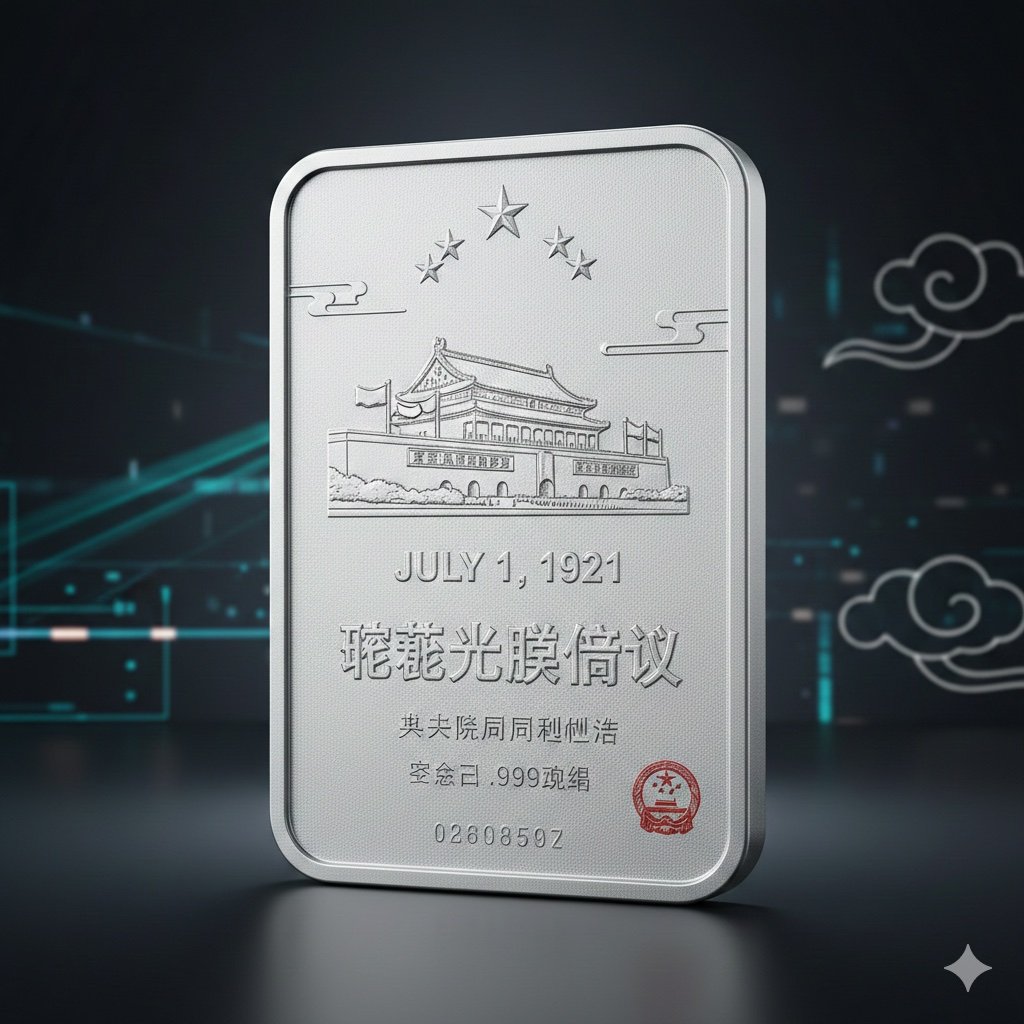
The primary impediment was the "ethereal" nature of previous stimulus efforts. The e-CNY (digital yuan) and smart-appliance trade-in subsidies failed to generate a "wealth effect" because they lacked the perceived permanence of physical assets. In a culture where wealth was traditionally anchored in tangible real estate, the Chinese consumer required a substitute for the "brick and mortar" security of the past. The distribution of a 31.1-gram physical silver bar is, therefore, an attempt to re-materialize household net worth, shifting the perception of wealth from a digital ledger to a physical hand.
The "Brilliant Luster" bar is a serialized investment-grade ingot. Each bar is stamped with the date July 1, 1921, commemorating the founding of the Chinese Communist Party (CCP). This choice of iconography is deliberate; it binds the intrinsic value of the precious metal to the historical legitimacy of the Party. This "hard stimulus" acts as a psychological circuit breaker; unlike a digital voucher that expires or a bank balance that feels precarious, the silver bar is perceived as a permanent floor to household poverty, theoretically emboldening the consumer to spend their existing yuan reserves.
The scale of this distribution—requiring approximately 500 million ounces—has triggered a global supply shock. By locking up a significant portion of the world's annual silver production for domestic "social stabilization," Beijing has inadvertently weaponized the metal. This "Silver Squeeze" has driven the global spot price to historic highs, creating a secondary "wealth effect" for the households who received the bars, but also starving the global solar and electronics industries of a critical industrial input.
The Brilliant Luster Initiative is a high-stakes gamble on the idea that the State can regain the consumer's heart by placing something heavy in their hand. Whether this leads to a new era of "Common Prosperity" or a nationwide return to hoarding precious metals remains the central question for the 2026 fiscal year.